Carisbrooke
Carisbrooke in Times Past
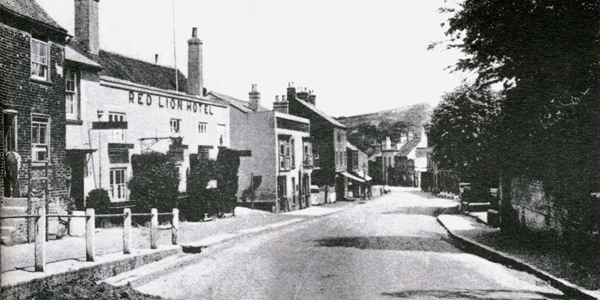
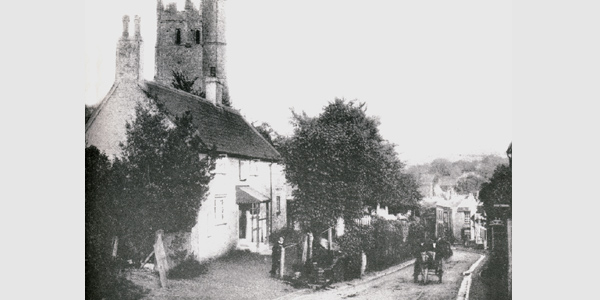
High Street, Carisbrooke
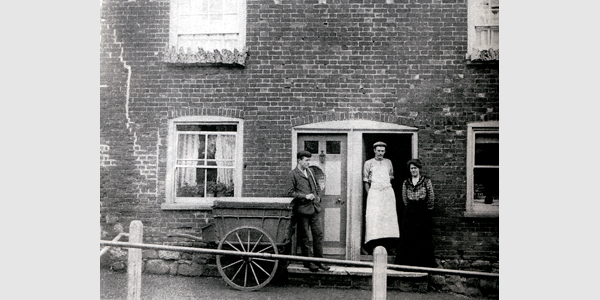
The Attrill family had the two end cottages nearest to the church steps. The right hand side was used as the baker's shop - the bakery was at the back. Seen pictured are, from the left, Frank Attrill, William Attrill and Lucy Watts (nee Attrill).
In 1889 Henry Barham at Myrtle Cottage ran the Post and Telegraph Office. He was also Parish Clerk. The post office has had many sites. The photograph shows it situated opposite the Eight Bells. Much later it moved to the junction of Castle Street and High Street (the opposite corner to Carisbrooke Pottery). There was a further move to Calbourne Road before it reached its present base at the corner of Calbourne Road and Priory Road.
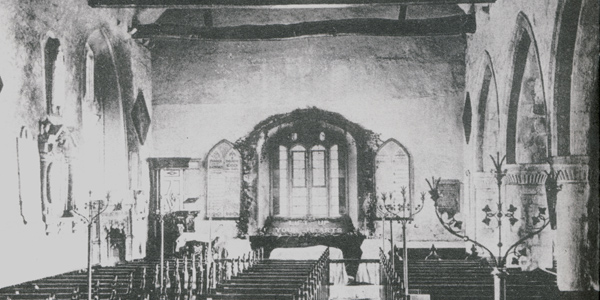
The church of St. Mary the Virgin is one of the finest and oldest on the island. There have been many alterations over the centuries. The Commonwealth Pulpit, on the left of the picture was added in 1658. In 1619 William Keeling, a famous sailor and discoverer of the Cocos Islands was buried in the church. A board to his memory can be seen on the wall.
There have been many alterations since the above picture was taken. The pulpit has been re-situated, the pews and aisles altered and the lighting improved.
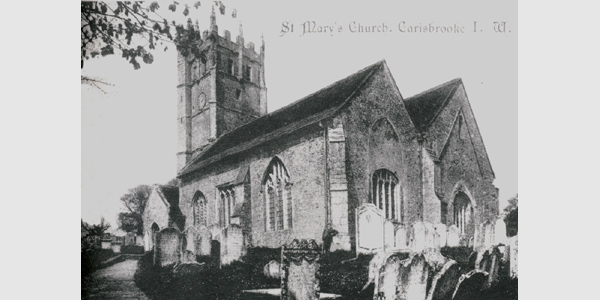
The church is the focal point of the village and the lofty tower dominates the High Street. H.R.H. the Princess Beatrice, youngest daughter of the Queen Victoria was a constant visitor.
The tower contains eight bells. The views from the top of the tower are magnificent. The churchyard was used as the Newport burial ground up until the late 16th century.
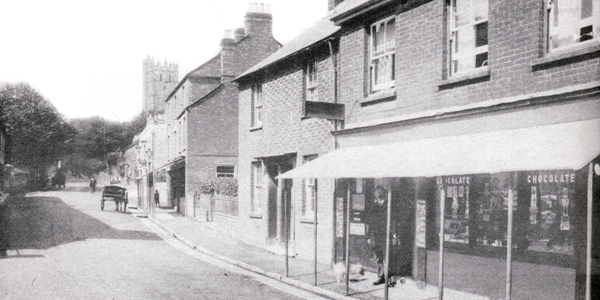
The church from Castle Street
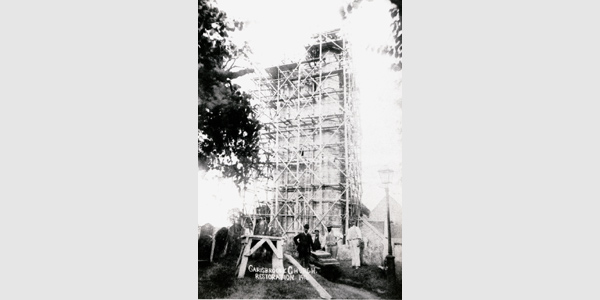
Church restoration 1906
The tower, built in 1470, was completely overhauled in 1906 under the guidance of the vicar, W. James Stobart. The entry to the tower can be seen at the foot of the ladder.
- The Attrill Family
- High Street, Carisbrooke
- Post and Telegraph Office
- Cutters Arms and Church
- St. Mary's Church
- Interior of St. Mary's Church
- The Church from Castle Street
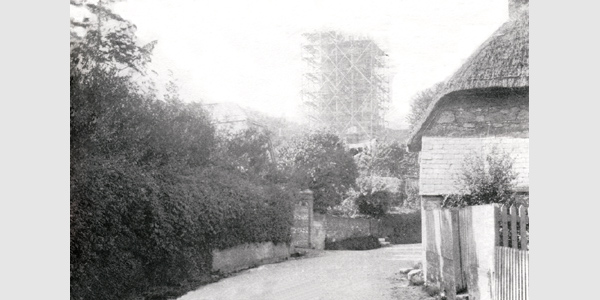
- Church Restoration, 1906